
Walk-In Cooler Repair
Continue from the symptom guide to the relevant commercial service or related diagnostic topic.
View walk-in cooler repair →Ice on an evaporator coil is an insulating blanket between your refrigeration system and your product, and it compounds every hour. This guide covers the five causes our technicians actually find on Hampton Roads calls, which ones you can fix yourself, and which ones spoil inventory fast. Written by the commercial refrigeration team at Elite Service & Enterprises, Chesapeake, Virginia.
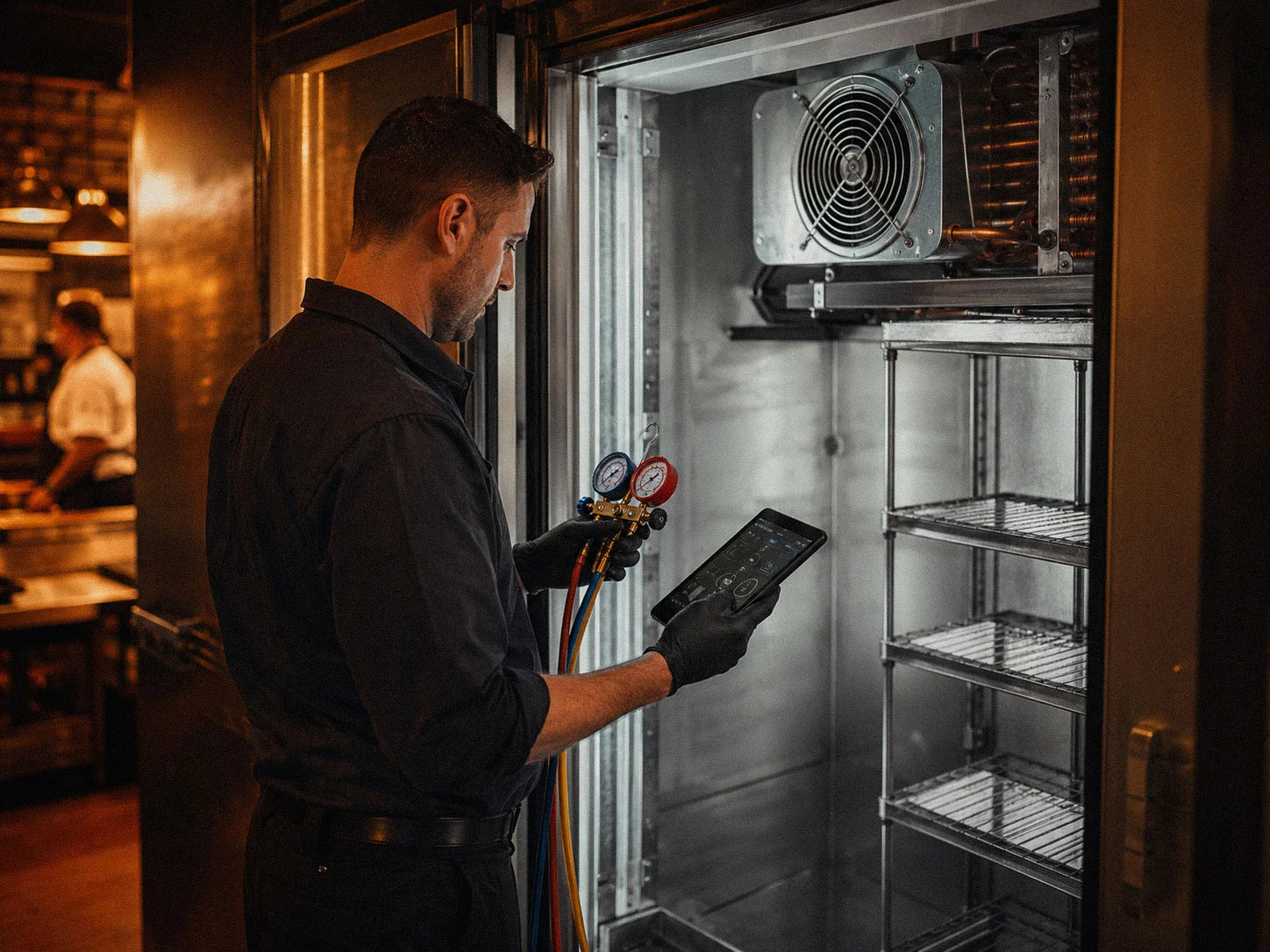
Ice on an evaporator coil looks like the system is working extra hard. It means the opposite. That ice is an insulating blanket between your refrigeration system and the air it is supposed to cool, and every hour it grows, airflow drops and box temperature climbs. On a walk-in cooler that is a bad week. On a walk-in freezer it can freeze the coil into a solid block that takes a technician half a day to thaw properly.
Here is what causes it, in the order we actually find it on Hampton Roads calls, and the difference between the causes you can fix and the ones you should not touch.
Every low-temperature system and most coolers melt frost off the coil on a schedule, using timers or a controller plus heaters or fan-off cycles. When a defrost timer, heater element or termination switch fails, frost never leaves, and it compounds daily. The signature: ice builds evenly across the whole coil face over days, and you may notice the box never does its usual warm-blip defrost cycle. This is a technician repair. Severity: high on freezers, moderate to high on coolers, because it always gets worse.
Hampton Roads humidity is the fuel ice is made from. A torn door gasket, a door that no longer self-closes, missing strip curtains, or a delivery-hour habit of propping the door feeds moist air to the coil, which freezes on contact. The signature: heaviest ice near the door side and fog rolling in when the door opens. This one you can largely fix yourself: repair the habits today, and have gaskets and closers repaired this week. Severity: moderate, but it is also quietly inflating your power bill.
Defrost works, but the meltwater has nowhere to go, so it refreezes in the drain pan and grows back up into the coil. The signature: ice starting at the bottom of the unit, water stains, or ice sheets on the floor under the evaporator. Do not pour hot water into the pan and call it fixed; if the drain heater failed or the line routing is wrong, it will be back next week. Severity: moderate, technician repair with a real root cause to find.
A system low on charge runs colder coil temperatures at reduced capacity, which frosts the coil even with a healthy defrost cycle. Low charge means a leak, and the leak is the actual repair. The signature: ice plus a box that was already running longer and struggling before the ice appeared. Severity: high. Sealed-system work is licensed-professional territory; there is no operator-side fix, and repeated top-offs without a leak repair just rent you the same failure again.
Product stacked in front of the evaporator fans, shelving blocking returns, or an overloaded box does the same thing a failing fan does: air moves too slowly across the coil and moisture freezes out on it. The signature: ice concentrated where airflow is blocked. Fix: reload the box with the fans' airflow path clear. Severity: low if caught early. Free to fix.
Do not chip, pry or heat-gun the ice. Coil fins bend, tubing punctures, and a punctured evaporator turns a heater element repair into a coil replacement plus refrigerant work. Do not keep hitting the defrost button as a lifestyle; forced defrosts treat the symptom while the cause compounds. And do not shut the system off to let it thaw without a plan for the product inside and the water coming out.
Established Elite customers and Elite Advantage members: call the emergency line at (757) 641-0085, any hour, any day. Emergency calls are the one place same-day service exists, and Advantage members go to the front of that line.
If we haven't worked together yet: call the office at (757) 641-0085, Monday through Friday, 7:30am to 4:00pm, and we will get you on the schedule. Then ask about the Elite Advantage Program. Members get 24/7 emergency access, priority dispatch, scheduled preventive maintenance, and a documented equipment inventory, which is why the operators who have been through one bad night rarely have a second one.
Move from the symptom to the right service page, maintenance option or related field guide.
Continue from the symptom guide to the relevant commercial service or related diagnostic topic.
View walk-in cooler repair →Continue from the symptom guide to the relevant commercial service or related diagnostic topic.
View walk-in freezer repair →Continue from the symptom guide to the relevant commercial service or related diagnostic topic.
View cooler not holding temperature →Refrigeration touches multiple trades, regulatory requirements, and your bottom line. Elite Service brings the licensing, certifications, and experience that make us a confident choice for commercial operators.
What restaurant managers, facilities directors, and operators ask before they bring us in.
Two ways to reach us: call us directly or submit a service request and our office team will be in touch promptly.
Thank you for contacting Elite Service & Enterprises. Our team will be in touch promptly. For urgent matters or emergency service, please call (757) 641-0085.