
Walk-In Cooler Repair
Continue from the symptom guide to the relevant commercial service or related diagnostic topic.
View walk-in cooler repair →Short cycling is a refrigeration compressor starting and stopping every minute or two instead of running steady cycles, and it is the hardest thing you can do to the most expensive component in the system. This guide covers the causes in the order technicians find them, the checks an operator can run, and why it is always a same-day call. Written by the commercial refrigeration team at Elite Service & Enterprises, Chesapeake, Virginia.
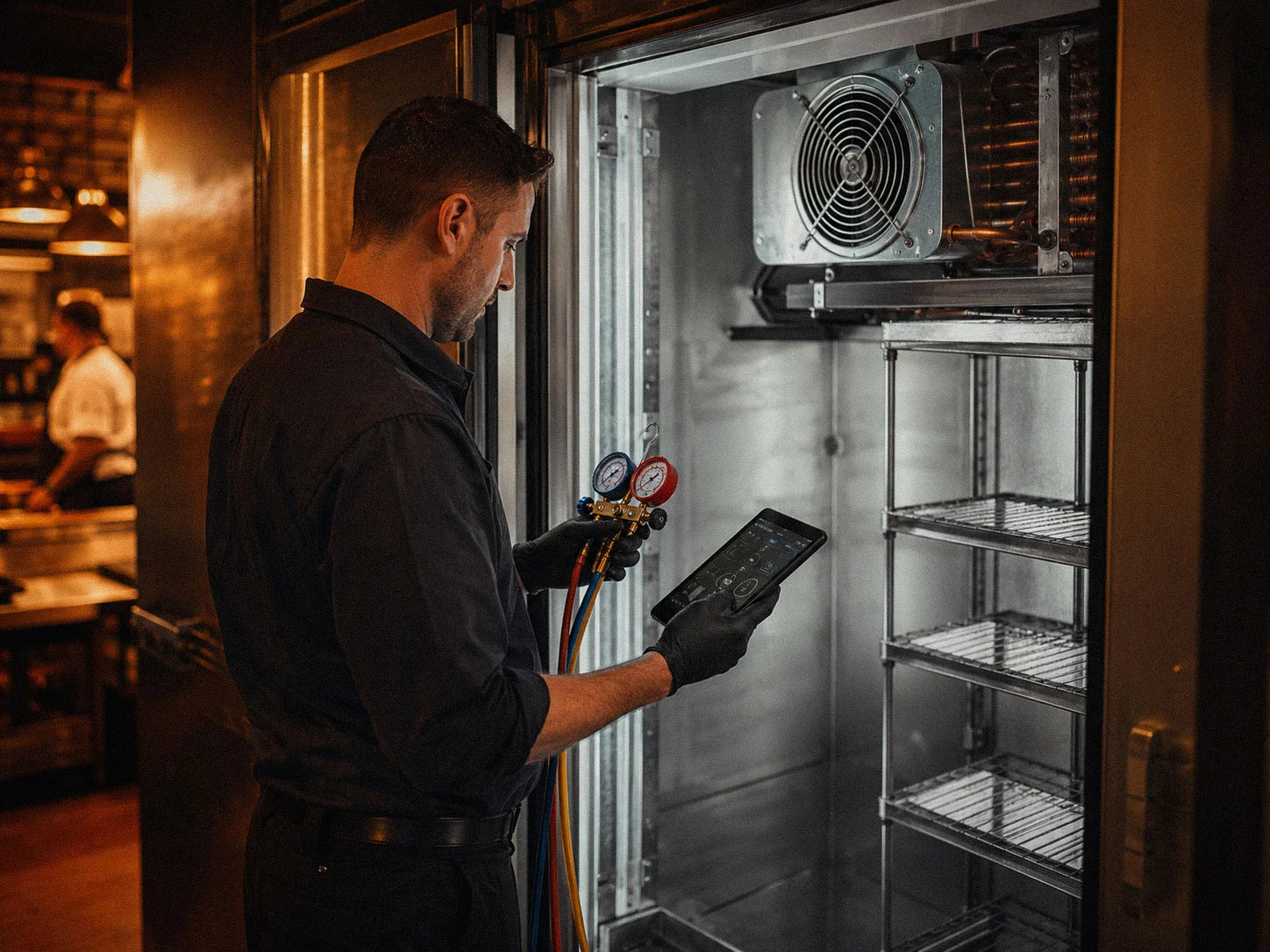
Short cycling is the sound of a refrigeration system dying on installments. The compressor kicks on, runs one to three minutes, shuts off, and does it again, all shift long. It is easy to ignore because the box may still be holding temperature, for now. Do not ignore it. The compressor is the most expensive component in the system, short cycling is the hardest thing you can do to one, and the fault behind the cycling never fixes itself.
Healthy commercial refrigeration runs in long, steady cycles: the compressor starts, runs until the box reaches temperature, and rests. Short cycling is repetitive starting and stopping on a timescale of a minute or two, usually because a safety control keeps tripping and resetting. The system is protecting itself from a real fault, over and over, and every protective trip costs compressor life.
Starting is the hardest moment in a compressor's life: inrush current heats the motor windings, and oil that lubricates the works needs runtime to circulate and return. A compressor that starts sixty times a shift instead of six gets all of the heat and none of the lubrication recovery. Motors cook, valves fail, and what began as a pressure switch or a dirty coil ends as the priciest repair on the invoice.
A leak drops the system below its low-pressure cutout, the safety trips, pressure equalizes, the compressor restarts, and the loop repeats. The leak is the repair; sealed-system work is licensed-professional territory and there is no operator-side fix.
A condenser that cannot reject heat drives head pressure into the high-pressure cutout, especially in a Hampton Roads summer. This is the one cause with an operator move: keep the area around the condenser clear, and get a professional cleaning if the coil is visibly packed.
Sometimes the safety itself has drifted or failed and is tripping on phantom faults. Diagnosis requires gauges and a technician; guessing by replacing parts is how one problem becomes three.
Pitted contactors, failing start components, and loose connections make a compressor stutter in ways that mimic pressure trips. Because we hold the electrical license alongside the refrigeration work, this diagnosis does not require a second contractor.
A coil buried in ice starves the system until pressures trip. If you can see ice, start with our coil ice guide; the cycling may be a symptom of that problem.
There is no wait-and-see row on this table. Persistent short cycling on a walk-in cooler or walk-in freezer is a same-day service call, full stop. The math is simple: the fault behind the cycling is usually a modest repair, and the compressor it is grinding down is the most expensive component in the system. Every hour of cycling moves cost from the first column to the second.
Established Elite customers and Elite Advantage members: call the emergency line at (757) 641-0085, any hour, any day. Emergency calls are the one place same-day service exists, and Advantage members go to the front of that line.
If we haven't worked together yet: call the office at (757) 641-0085, Monday through Friday, 7:30am to 4:00pm, and we will get you on the schedule. Then ask about the Elite Advantage Program. Members get 24/7 emergency access, priority dispatch, scheduled preventive maintenance, and a documented equipment inventory, which is why the operators who have been through one bad night rarely have a second one.
Move from the symptom to the right service page, maintenance option or related field guide.
Continue from the symptom guide to the relevant commercial service or related diagnostic topic.
View walk-in cooler repair →Continue from the symptom guide to the relevant commercial service or related diagnostic topic.
View walk-in freezer repair →Continue from the symptom guide to the relevant commercial service or related diagnostic topic.
View evaporator coil ice guide →Refrigeration touches multiple trades, regulatory requirements, and your bottom line. Elite Service brings the licensing, certifications, and experience that make us a confident choice for commercial operators.
What restaurant managers, facilities directors, and operators ask before they bring us in.
Two ways to reach us: call us directly or submit a service request and our office team will be in touch promptly.
Thank you for contacting Elite Service & Enterprises. Our team will be in touch promptly. For urgent matters or emergency service, please call (757) 641-0085.